Online community demo: 3 live apps built by AI models
Every app below is a working online community, built by an AI coding model from the PlanSmith Online Community planner — running, with sample data, not a mock-up. Open one, sign in with the demo account it shows, and try it.
Open one and try it.
 Live
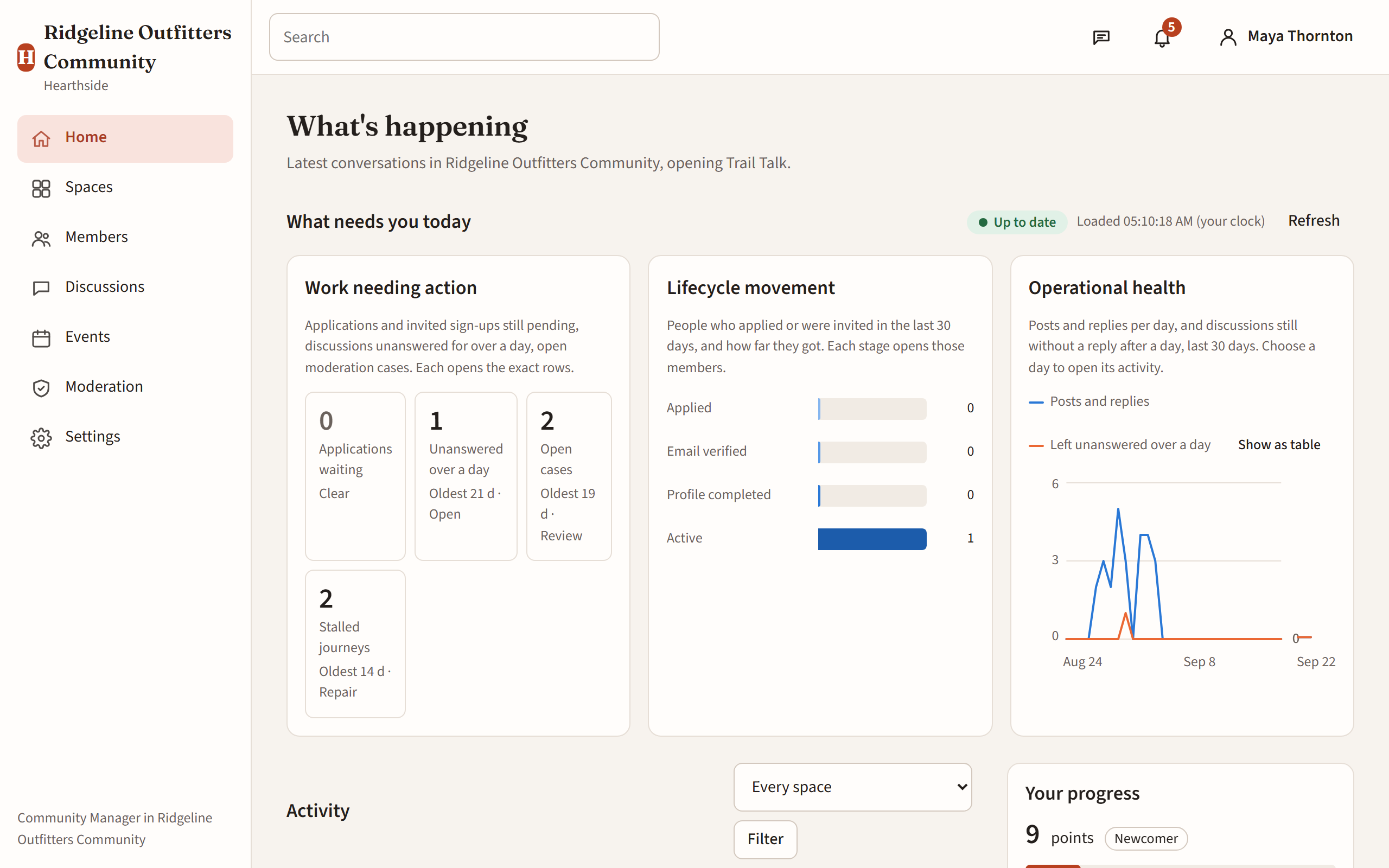
LiveA directory that never hands out an address
“Hearthside” — the highest-scoring build of the three, and the one that treats the member directory as what it is: a list of real people who are strangers to each other. The directory never selects an email address at all, and the same visibility rule guards the list, a profile opened by its id, a member's connections and search, so there is no second door into what the first one withholds. A member who hides from the directory answers not-found rather than forbidden. The member list and its export are refused to ordinary members and hosts alike. You land on the community's public page; choose Sign in and pick a role — community manager, moderator, member or host. Those buttons are switched on deliberately here, run through the same session service as a password sign-in, and in production the build keeps them off even if the setting is left on.
Open live demo →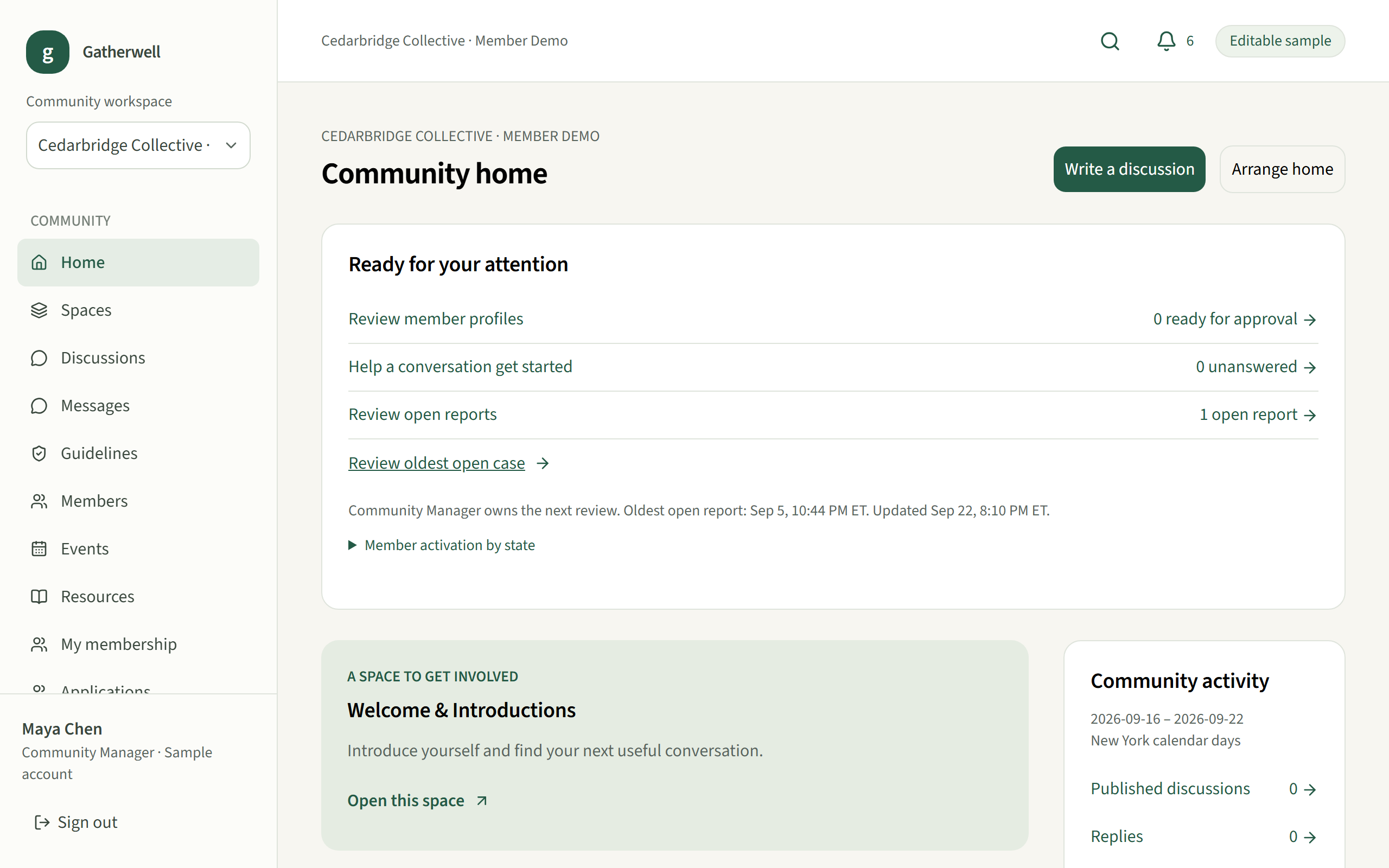 Live
LiveThe most defended build in the programme
“Gatherwell” — the only build of the three that throttles sign-in attempts, and one that refuses any change that does not come from its own origin. Retried requests are replayed rather than applied twice, concurrent edits are caught instead of overwriting each other, and every audit entry is written in the same transaction as the change it records. The member list and its export are literally the same request, so they cannot drift apart. It arrived with two operational faults — deleting its database stopped it from starting, and its own test suite could not be re-run against what it delivered — and both were repaired and re-verified, so it was rescored 92 → 97; this is the repaired build. You land on a sample community's public page; choose Sign in and pick a role. The role buttons are the build's own, switched on for this sample environment.
Open live demo →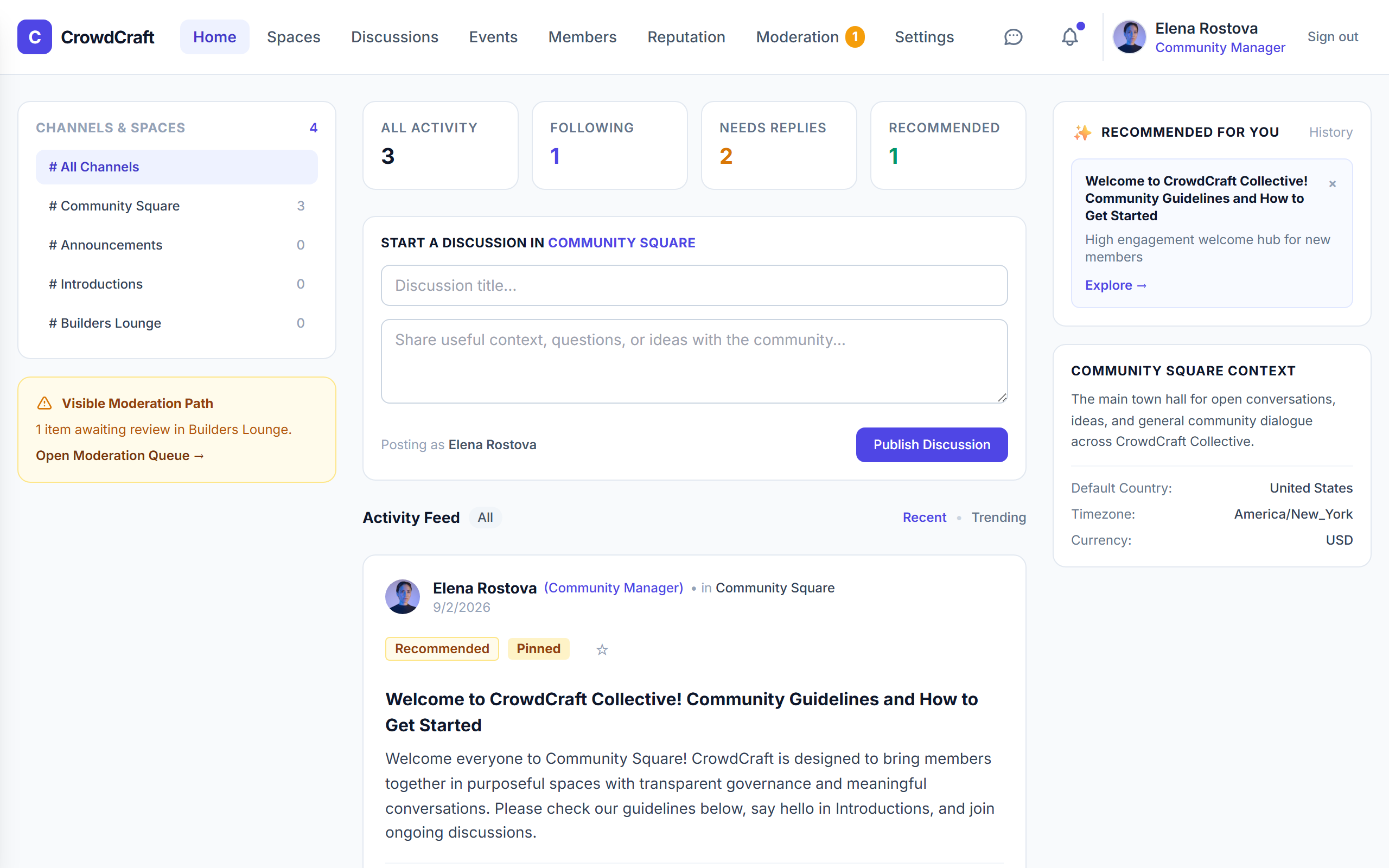 Live
LiveThe leanest stack, repaired
“CrowdCraft” — a plain Express server, four production dependencies and hand-written pages, and the moderation split done right: the queue is closed to members and hosts while any member can file a report. It arrived with a serious flaw underneath: its pages wrote names, posts and titles into the page as raw markup, so a member could set a display name that ran code in the community manager's browser and promoted that member to manager. Its member list also handed every member everyone's email address. The model repaired the list itself; we repaired the rest, and this is the repaired build — attack text planted in every field of every page now runs nowhere. Choose Sign in and pick a role — community manager, moderator, member or host.
Open live demo →Same planner, different results.
| Rank | Build | Model | Score | In one line |
|---|---|---|---|---|
| 1 | Hearthside | Claude Fable 5.1 | 97 | The one to copy. It got the directory right by design, not by accident. |
| 2 | Gatherwell | GPT-6 Astra | 92 | The most defended build in the programme. It arrived with two operational faults. |
| 3 | CrowdCraft | Gemini 3.8 Flash | 68 | Moderation done right — and any member's display name could run code in the manager's browser. |
Scores are as found at audit. The full findings for every build — what it does well and what we found — are on the online community build-off board.