16 markets · Every checklist item cited · Counted by hand
Your agent can write the code. It can't know the market.
A PlanSmith planner carries a feature inventory counted by hand from the real products already selling in your market. Drop one into your project, answer its questions, and your coding agent builds from a spec instead of a guess.
We hand the same planner to every model.
Then we audit what each one actually shipped — scored on the axis that market lives or dies by, not on how it looks. Most recent run:
Fig. 01 — Online community, 4 models, audited 2026-09-23| Model | Verdict | Score |
|---|---|---|
| 1Claude Fable 5.1 | Best OverallThe one to copy. It got the directory right by design, not by accident. | 97 |
| 2GPT-6 Astra | Best HardeningThe most defended build in the programme. It arrived with two operational faults. | 92 |
| 3Grok 4.7 | Leanest StackIt kept email addresses private and escaped every page — then let removed members keep reading. | 80 |
| 4Gemini 3.8 Flash | Fast-Tier BuildModeration done right — and any member's display name could run code in the manager's browser. | 68 |
Scored as found at audit — later fixes are noted, not re-scored. 14 build-offs so far, 65 builds audited.
Read the full board →Is this you?
PlanSmith is for people building software for a market they don't know inside out — which is almost everyone, almost every time.
You want to start your own SaaS
You know the market you want to sell into. You don't know what the ten companies already selling there treat as table stakes — and shipping without those is why a launch lands flat. Start from their feature list instead of a blank page.
A client wants it built
You need to scope it before you quote it. Walk a cited checklist with them, decide together what's in and what's deferred, and hand back a spec neither of you has to argue about later.
You already tried, with an agent
It produced something that demos beautifully and falls over the moment a real person uses it — no roles, no audit trail, features that look finished and aren't. The gap was never the code. It was knowing what to build.
You're paying for software that nearly fits
You've outgrown the tool, or you're paying per seat for the 10% you use. Building the version that fits is now realistic — as long as you know what the incumbent actually does.
Or start from the thing you're building
- You want to build accounting and invoicing software — but double-entry, reconciliation and aging reports are a black box.
- You want to build a job board — but you haven't worked out how one employer is kept away from another's applicants.
- You want to build an appointment booking system — but deposits, no-shows, cancellation windows and staff calendars are guesswork.
- You want to build a retail inventory system — but you don't know what counts, receiving and stock valuation actually involve.
- You want to build ecommerce inventory software — but overselling across two sales channels is a problem you can't yet describe.
- You want to build a restaurant management system — but you've never had to make a sale deplete the ingredients behind the dish.
- You want to build a learning platform — but you don't know what makes a completion record hold up to an auditor.
- You want to build an online store — but you're not sure how to stop a refreshed checkout charging someone twice.
- You want to build a helpdesk and ticketing system — but keeping an internal note away from the customer is a detail you'd miss.
- You want to build a school management system — but you couldn't say what a registrar does all day, or why fee collection breaks.
- You want to build a point-of-sale system — but you can't yet say how a refund should reverse stock, loyalty and cash at once.
- You want to build a paid membership site — but you haven't worked out what should happen the month a member's card fails.
- You want to build a ticketing and box-office system — but you haven't worked out what happens when two people buy the last seat at the same moment.
- You want to build a fleet management system — but you'd build the live map first and still couldn't say which van is roadworthy this morning.
- You want to build a construction management system — but every trade on the job would read every other trade's contract value.
- You want to build an online community — but every member would be handed every other member's email address.
What you actually do.
Nothing to install and no integration to wire up — a planner is a folder of Markdown your coding agent reads. Four steps, start to finished spec.
Buy and unzip it into your project
Pick your market, pay once, and download the zip from your library. Drop the folder in your repo next to your code.
You now have: the planner folder in your project.
Point your agent at it
Open Claude Code, Cursor, or ChatGPT Codex in that project and send one line:
Read START-HERE.md and act as the planner.
You now have: the planner running, asking the first question.
Answer the interview
It walks the cited checklist and asks you to include, defer, or skip each feature real products in this market ship. You don't need to know the domain — that is what the inventory is for.
You now have: every scope decision made, on the record.
Tell your agent to build
The planner writes your spec to CLAUDE.md or AGENTS.md — scope, build order, and what counts as done. Your agent builds from that instead of improvising.
You now have: an app built to a plan, not to a guess.
Not sure what a planner is or whether you need one? Read the FAQ — it answers the practical questions before you buy.
Real, running apps these planners produced.
Not mockups. Every one is live, seeded, and open — click through and use it.
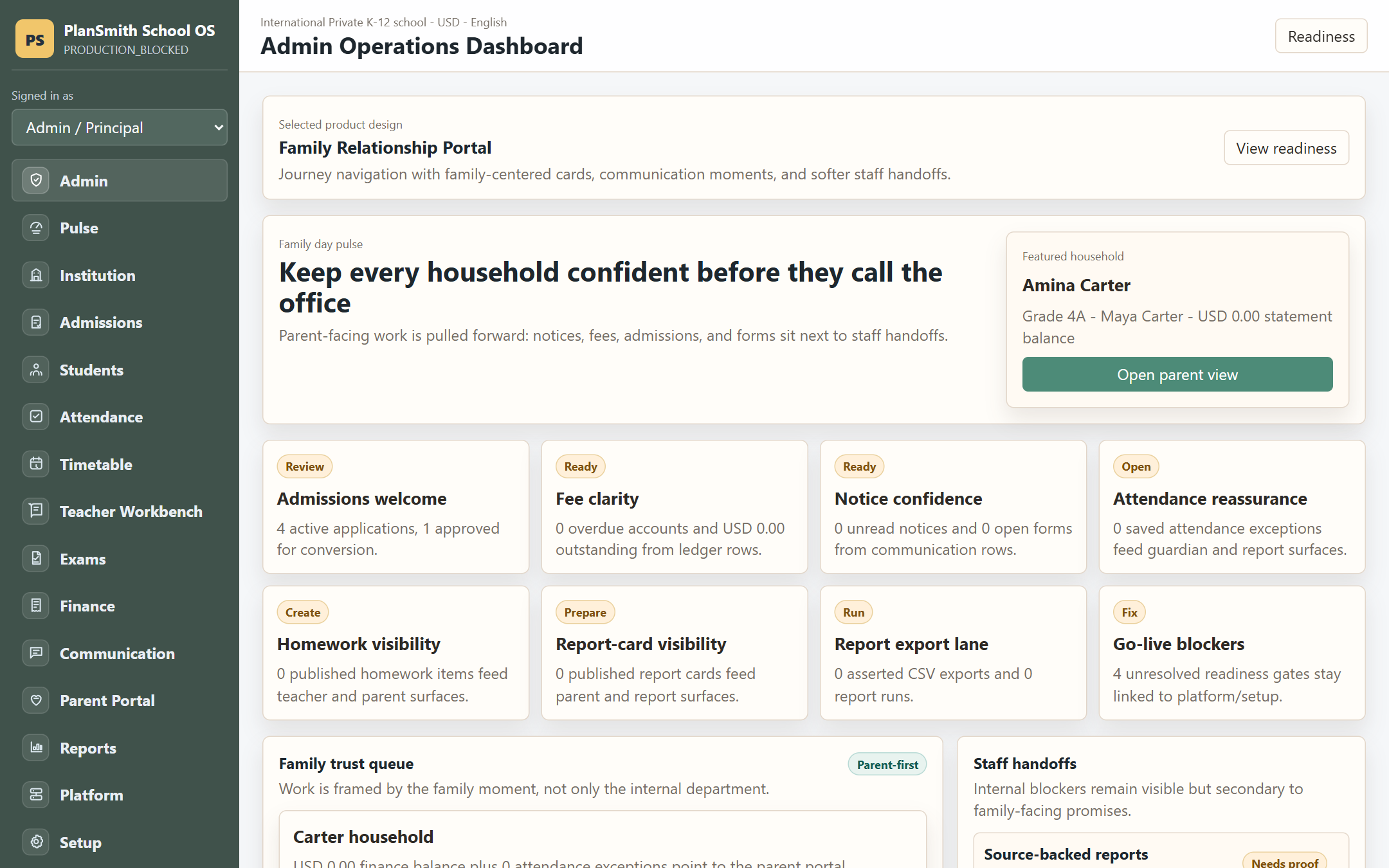 Fig. 01 — Lifecycle BuildSchool ManagementA complete school system with role workspaces for Admin, Teacher, Registrar, Cashier, and Parent — admissions through fees. The most evolved lane: a multi-style UI bake-off and feature-lifecycle build.Open live demo →
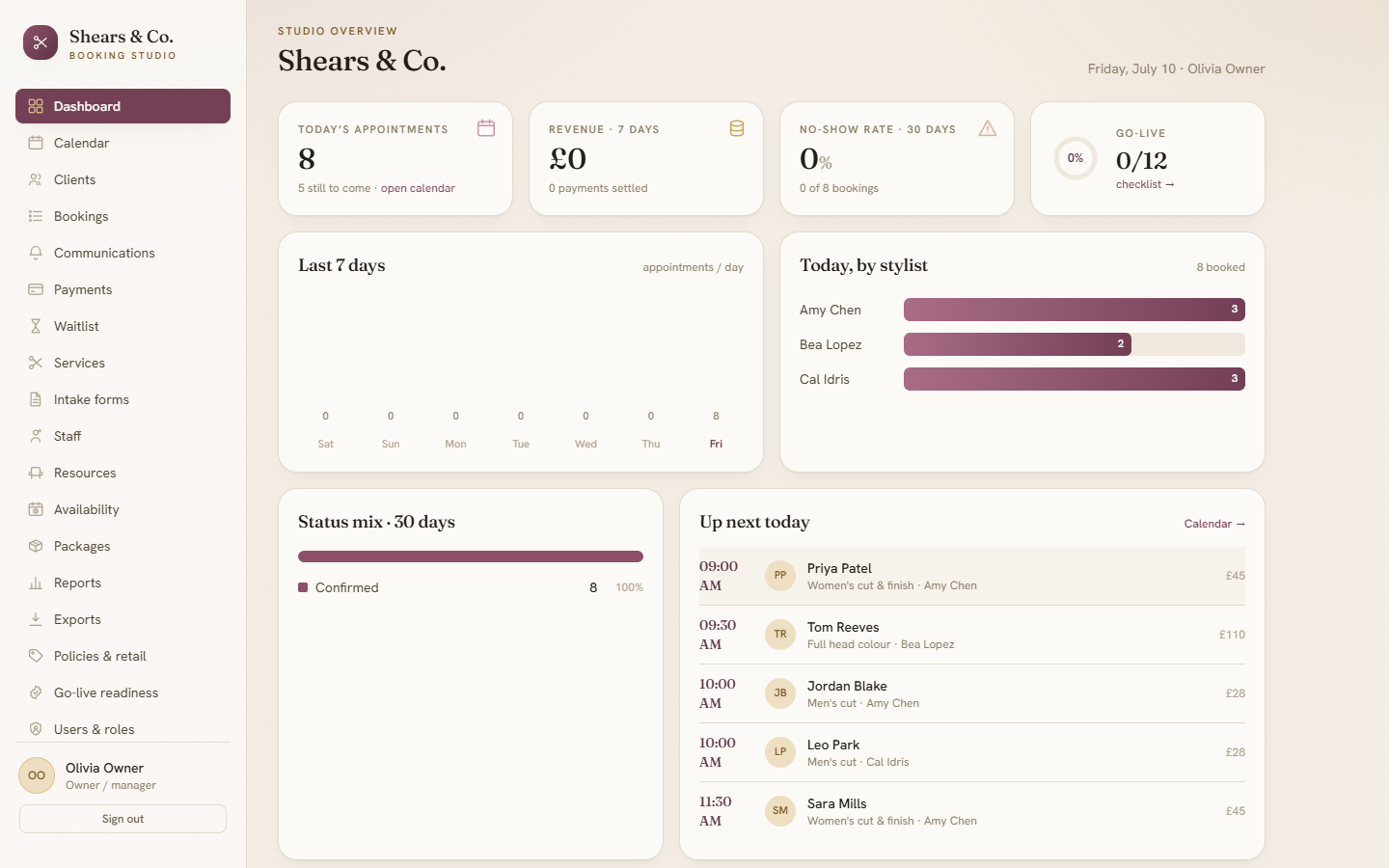 Fig. 02 — Salon & spaAppointment Booking“Shears & Co.” — a full salon/spa back office: staff-column calendar, bookings, clients, fees, waitlist, services, and a go-live checklist. The most evolved of the four Opus 4.8 runs.Open live demo →
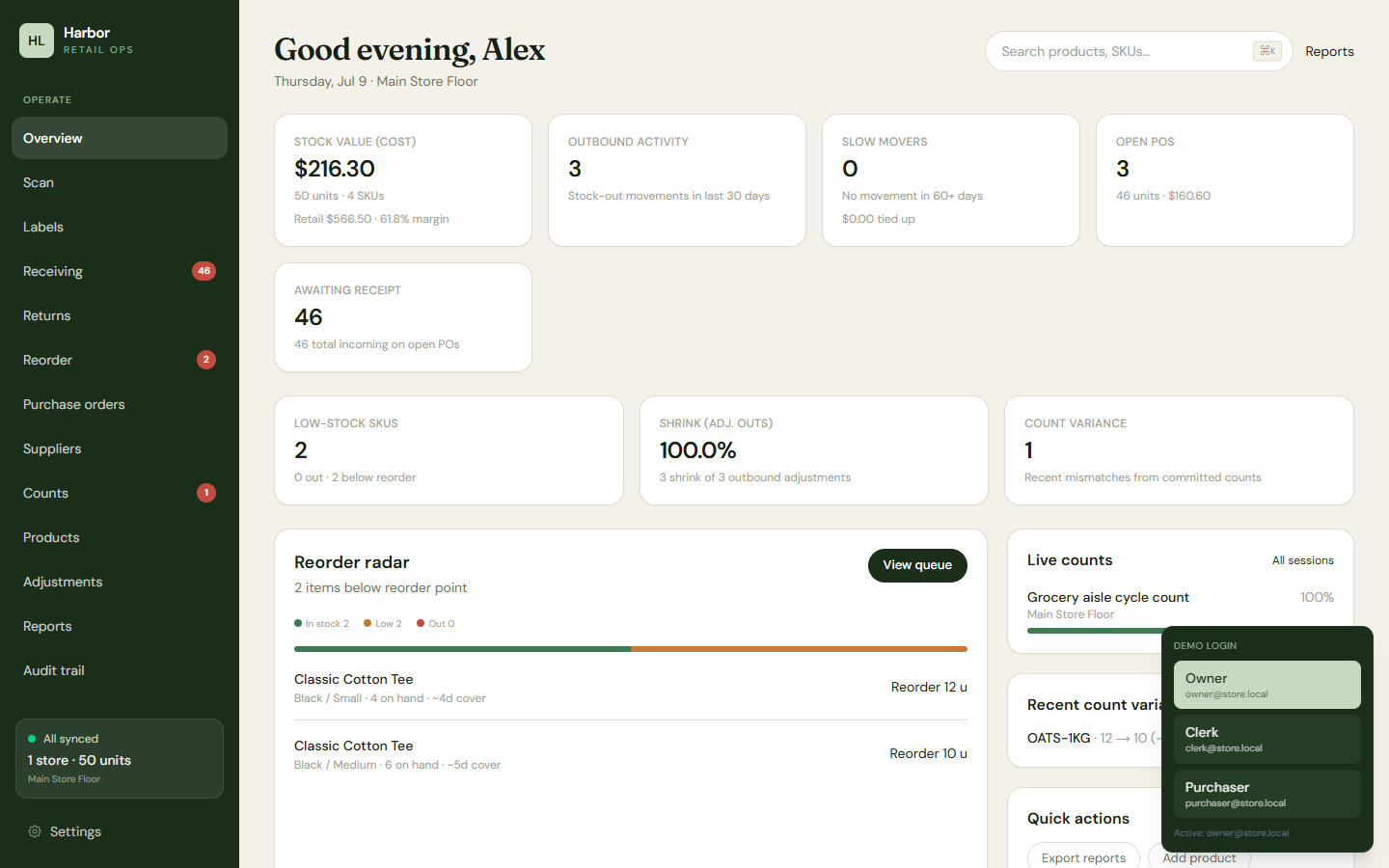 Fig. 03 — Harbor LaneRetail Inventory Management“Harbor Lane General Store” — the most complete and best-looking build of the set: size-and-colour variants, printable barcode labels, purchase orders through to receiving, supplier returns, stocktakes and valuation reports.Open live demo →
Every line traces to something we counted.
Ask an agent to build a school system and it will invent a feature list from whatever it absorbed in training. Ask it to build from a count of what 46 real school systems actually ship, and there is nothing left to guess about. No model wrote these numbers — every inventory was tabulated by hand from products selling today.
Fig. 05 — Feature prevalence, school management (n = 46 school systems) · one of 15| Feature | Observed | Prevalence |
|---|---|---|
| Admin / principal portal | 38 / 46 | 83% |
| Gradebook / marks entry | 38 / 46 | 83% |
| Attendance and fee reports | 37 / 46 | 80% |
| Classes / grades / sections | 36 / 46 | 78% |
| Teacher portal | 35 / 46 | 76% |
Counted by hand from in-market products. The full frequency-ranked ledger ships inside every planner.
This is one ledger of 15. Every planner's sample runs from 18 to 120 sources, counted the same way. The one planner that doesn't have a ledger yet is flagged on its own page rather than sold as if it did. See every planner's count →
16 markets.
$49 per planner. Lifetime access, free updates as the inventory grows. No subscription, no lock-in.
Browse all planners →