Appointment Booking Planner
Research-backed planner that turns a vague booking-app idea into a scoped, agent-executable spec across 7 service subtypes.
The problem this kills
"Build me a booking app" is one of the most dangerous prompts you can hand an AI coding agent. The agent will pick a subtype, invent a data model, bolt on features it thinks belong, hard-code durations and cancellation windows, collapse the booking lifecycle to a single boolean, and ship you something that double-books clients on concurrent requests. Then you spend three days untangling it.
The appointment-booking domain is genuinely wide. A salon calendar, a clinic scheduler, a field-service dispatch board, a fitness class roster, and a marketplace multi-provider flow are all "booking apps" — but they share almost nothing in their data models, compliance posture, or UI grammar. Getting the subtype wrong at the start locks in the wrong architecture for every step that follows. Add the common failure modes — double-booking, no-show revenue leaks, SMS feature confusion, migration fear, marketplace fee surprises — and a generic agent prompt produces a generic disaster.
Why your agent can't fake this
This planner is grounded in a research pass across more than 100 sources: live SaaS products across salons, clinics, fitness, consultants, field service, and marketplaces; open-source self-hosted schedulers; CodeCanyon scripts and WordPress plugins; UI kits and admin templates; and practitioner pain sources from real operators. The evidence anchors embedded in the planner — INV-A01 through INV-A26, TECH-01 through TECH-24, UI-P01 through UI-P17, and 14 documented pain anchors — are sourced directly from that research. Your coding agent cannot reproduce "this availability design was validated across live SaaS products including Square, Fresha, GlossGenius, Vagaro, Cliniko, Jane App, Calendly, Setmore, Jobber, Housecall Pro, Mindbody, Glofox, WellnessLiving, and a full open-source and plugin layer" without redoing the scrape. That is the moat. The planner knows which features are core to every booking app, which belong to specific subtypes only, which are advanced branches that should never leak into a Basic build, and which are forbidden families to scan before writing the spec.
What you actually get
A four-file planner pack that your coding agent reads to run a structured discovery interview and produce one agent-executable build spec:
- START-HERE.md — the single file you point your agent at. One command, then answer decision blocks.
- skill.md — the planner logic: operating rules, six Basic discovery blocks, Moderate and Advanced modes, three scope presets, UI and booking-integrity contracts, a forbidden-family scan protocol, a 20-section generated spec output contract, a nine-step Basic build order, and a 30-point acceptance test checklist.
- evidence-summary.md — compact evidence anchors the planner cites at runtime: inventory, UI, UX observation, pain, technical, role, workflow, and UI IA anchors.
- example-output.md — a worked proof showing buyer answers and a full generated spec. Useful to inspect; not used as planning context unless you ask.
The generated spec covers: project brief and locked decisions, explicit non-goals, evidence-scoped feature table, roles and permissions, data model, screen map, UI requirements, workflows, technical requirements, setup and seed data, security and privacy posture, reports, implementation phases with build steps, acceptance tests, handover and readiness gates, risks, amendment roadmap, and a forbidden-family scan result.
Every build step includes tables, screens, server actions, seed data, acceptance checkpoint, and a hard "do not continue until" gate.
Coverage
The planner handles three delivery depths. Basic targets a single-location appointment-first business in 7-9 build steps: subtype selection first, then service catalog, staff and availability engine, public/mobile booking page, manual/staff booking calendar with generated slot cards, booking lifecycle, reminders and payment policy if selected, reports, and handover audit. Moderate adds waitlist, intake forms and waivers, packages and session credits, richer role permissions, two-way messaging, migration/import, and deeper reporting. Advanced unlocks clinic records and compliance posture, fitness classes with roster and membership credits, field-service dispatch and service areas, marketplace profile and commission reconciliation, multi-location operations, and self-hosted/plugin deployment gates.
Branches the planner explicitly manages as opt-in only — never leaking into Basic — include: salon/spa/barber, clinic-lite/therapy/dental, fitness/classes/personal training, repair/field service, marketplace multi-provider, consultant/professional services, full POS and retail inventory, integrated payments with card-on-file and no-show fees, clinical records and telehealth, and self-hosted or WordPress plugin installs.
The planner ships booking-integrity contracts into every generated spec: generated slot cards rather than bare date inputs, availability validation at display time and again on submit, interval-overlap conflict checks rather than exact-start equality, race-safety mechanism naming, and source-of-truth reporting from the actual booking ledger — not seed constants or parallel counters.
Proven in a live build-off
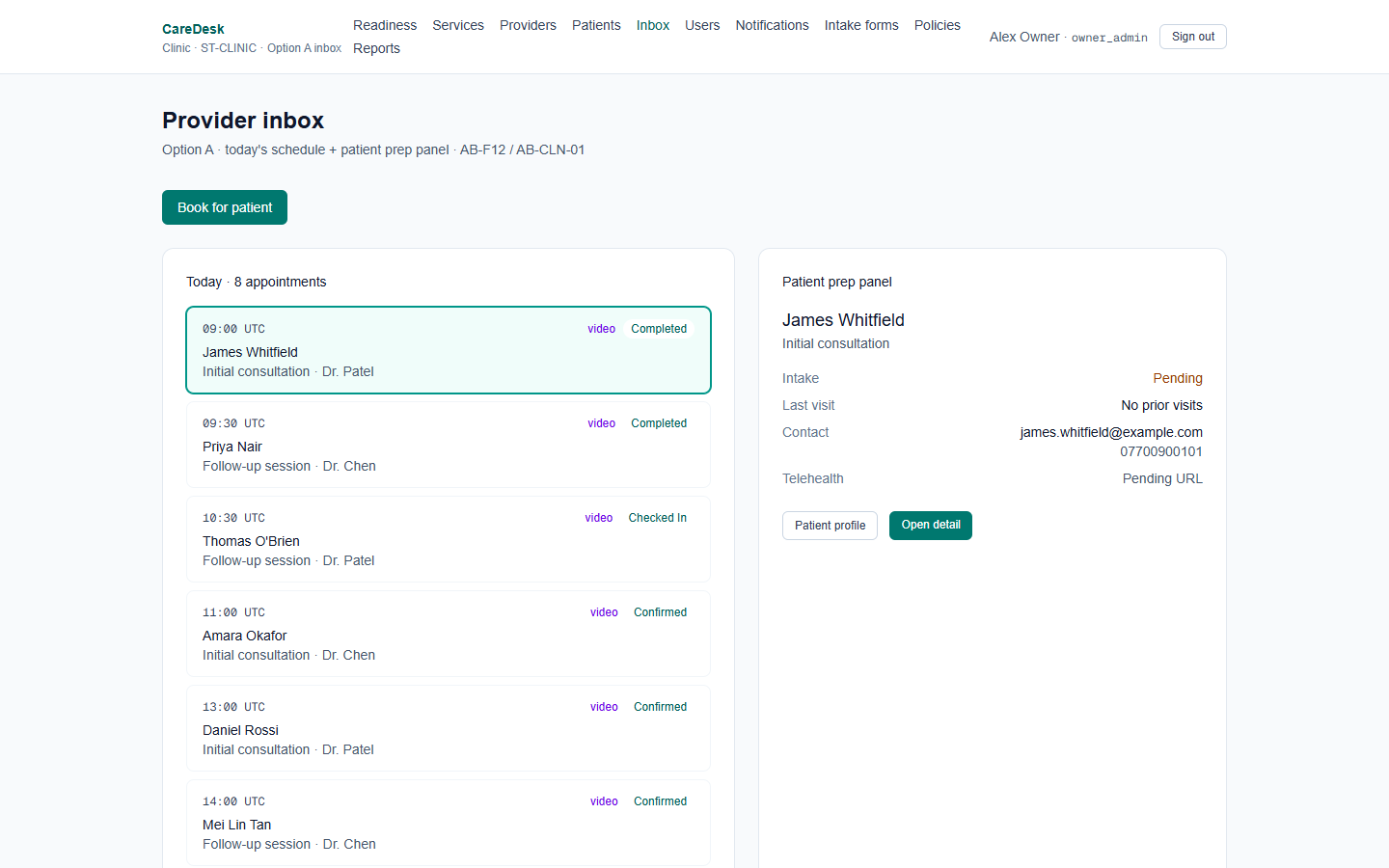
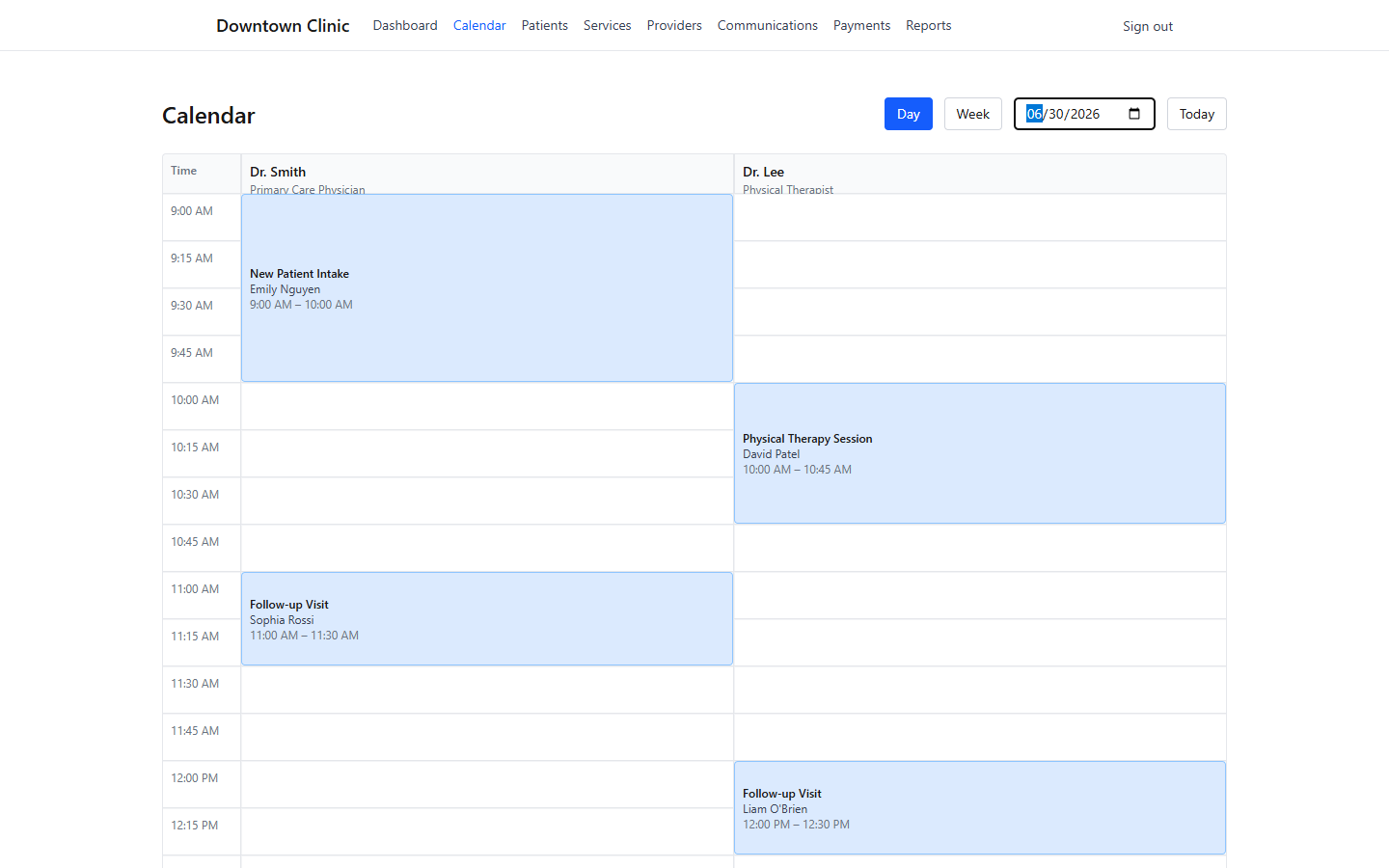
This planner has been dogfooded harder than anything else in the catalog: seven working booking apps were built from it across four coding models — Claude Opus 4.8 across four planner runs, GLM 5.2, Composer 2.5, and Kimi 2.7. Each produced a different booking vertical (salon, clinic, fitness studio, care desk), which is the point: the planner adapts. All seven run as live demos you can log into from this page, and the full scored ranking is published as a PlanSmith benchmark.
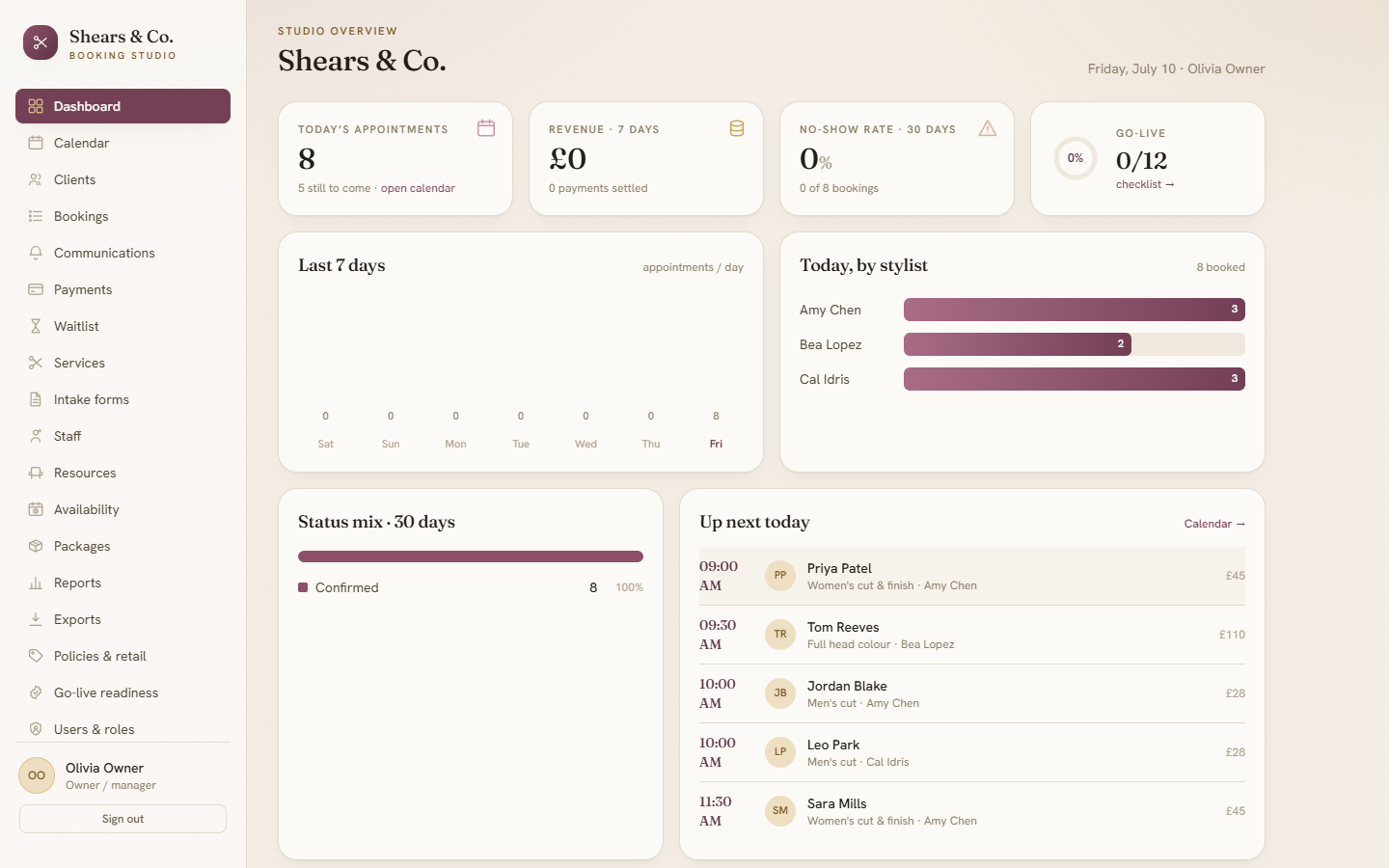 Shears & Co. — a full salon/spa back office built from this planner, ranked Best Overall in the build-off. Log into it live from the demos below.
The frequency-ranked ledger.
Real apps this planner built.
Each one is live — sign in and try it. Compare all 7, with their scores →
LiveSalon & spa
“Shears & Co.” — a full salon/spa back office: staff-column calendar, bookings, clients, fees, waitlist, services, and a go-live checklist. The most evolved of the four Opus 4.8 runs.
Open live demo →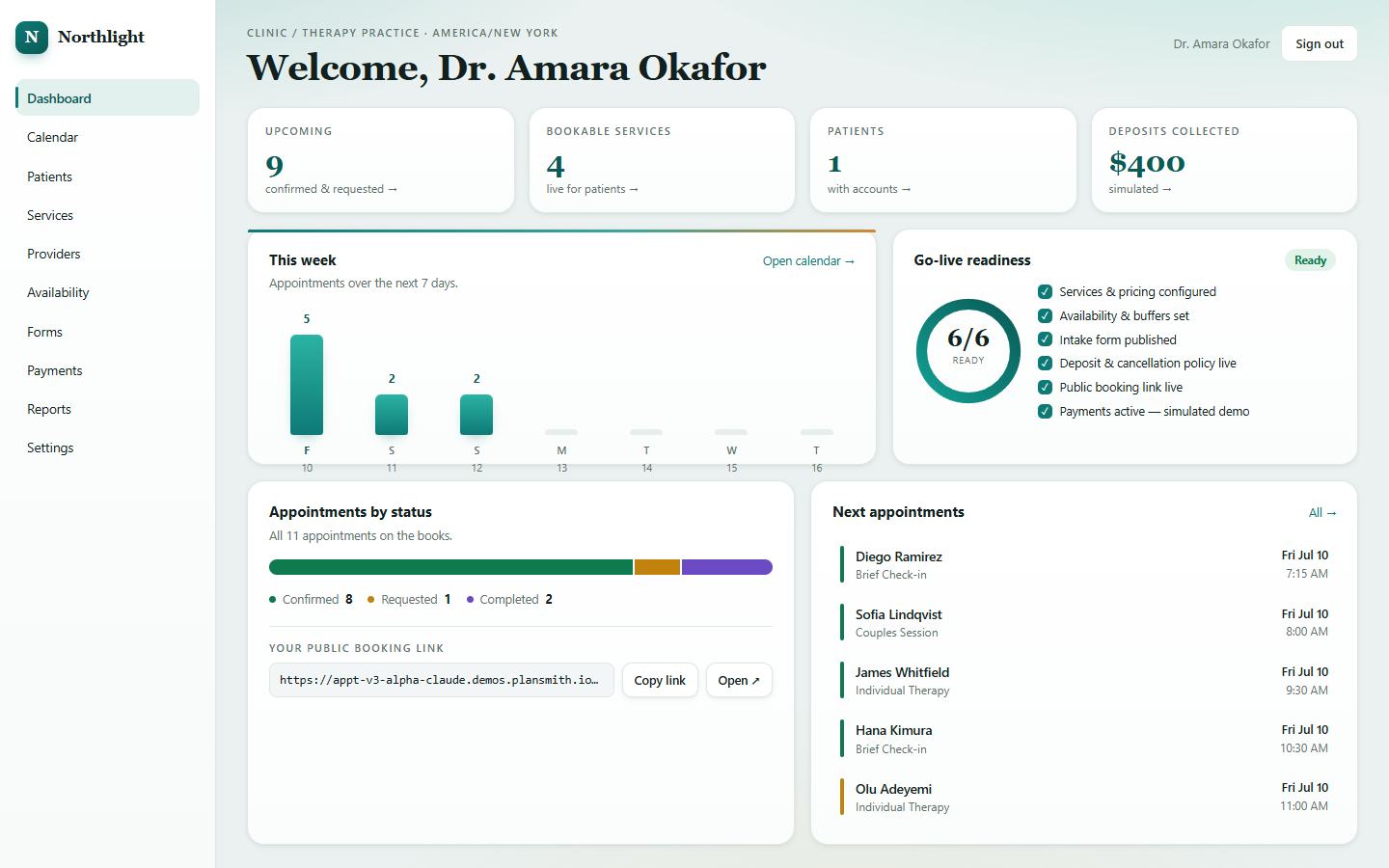 Live
LiveClinic & therapy
“Northlight” — owner, provider, and patient roles with services and scheduling for a clinic/therapy practice. An earlier run, showing how the planner's output matured.
Open live demo →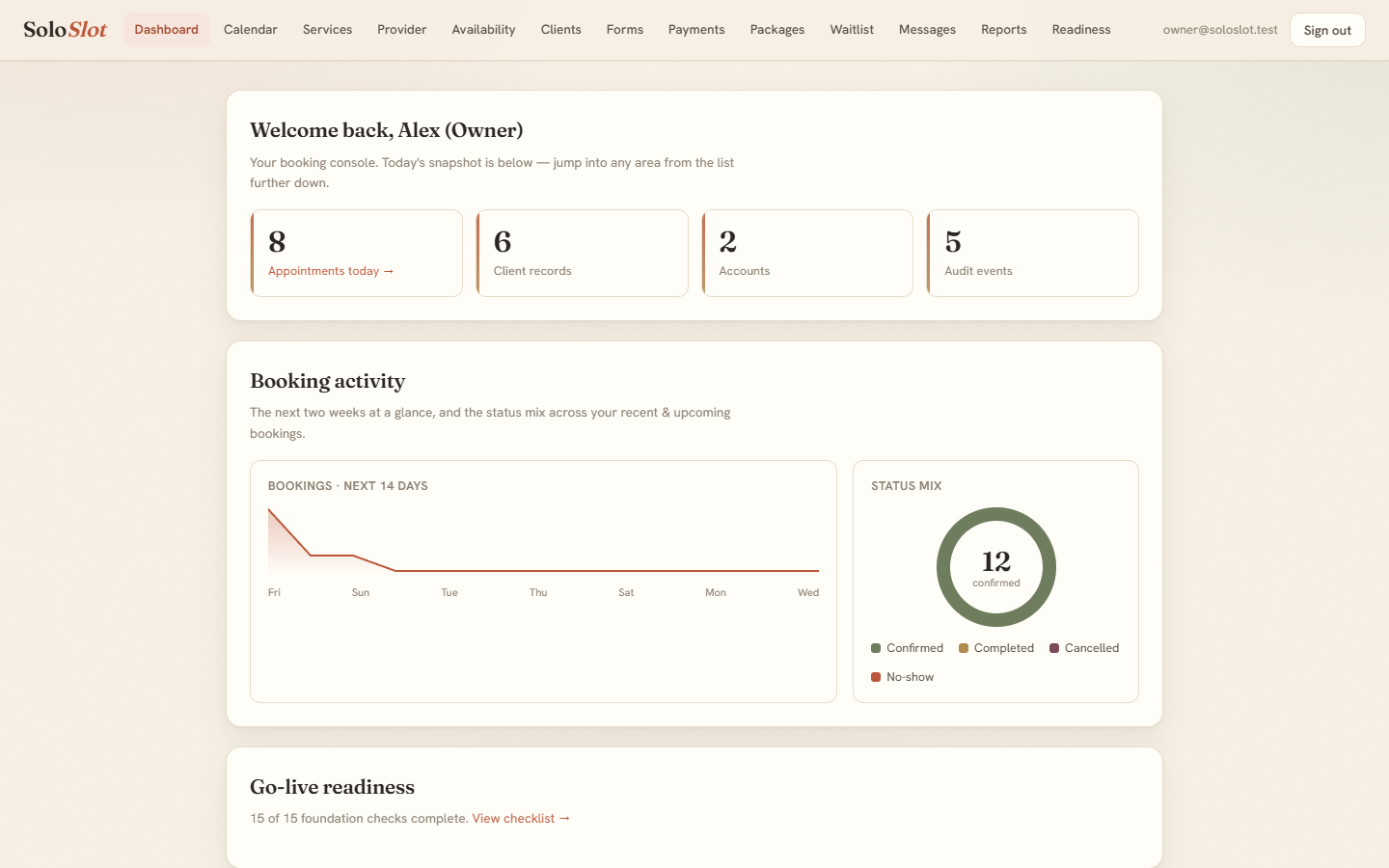 Live
LiveSolo practitioner
“SoloSlot” — a lean single-provider cut with owner and client roles. The pared-down end of the planner's range.
Open live demo →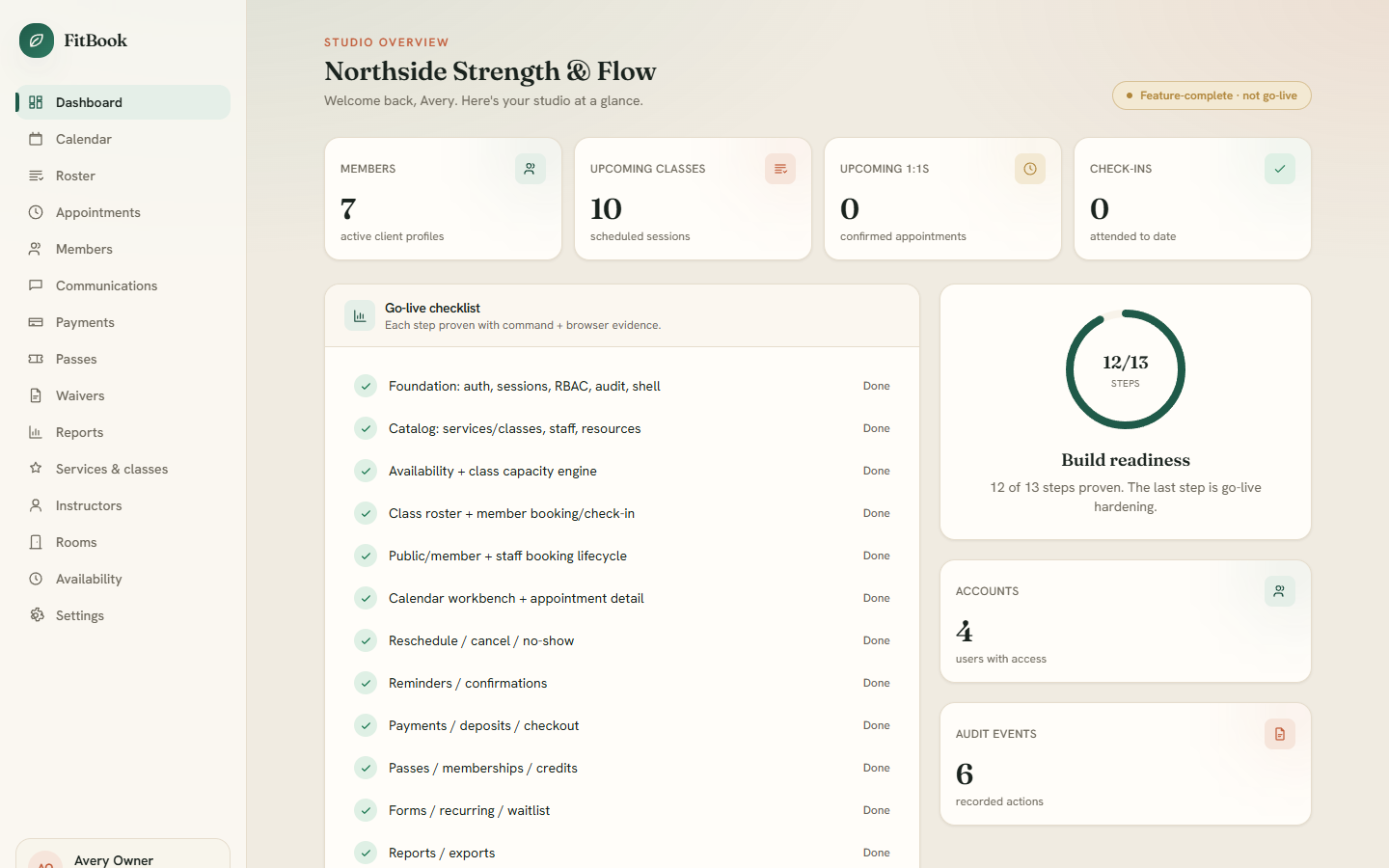 Live
LiveFitness studio
“Studio” — the first build off the planner: a class/fitness studio with instructors, members, and a room calendar.
Open live demo →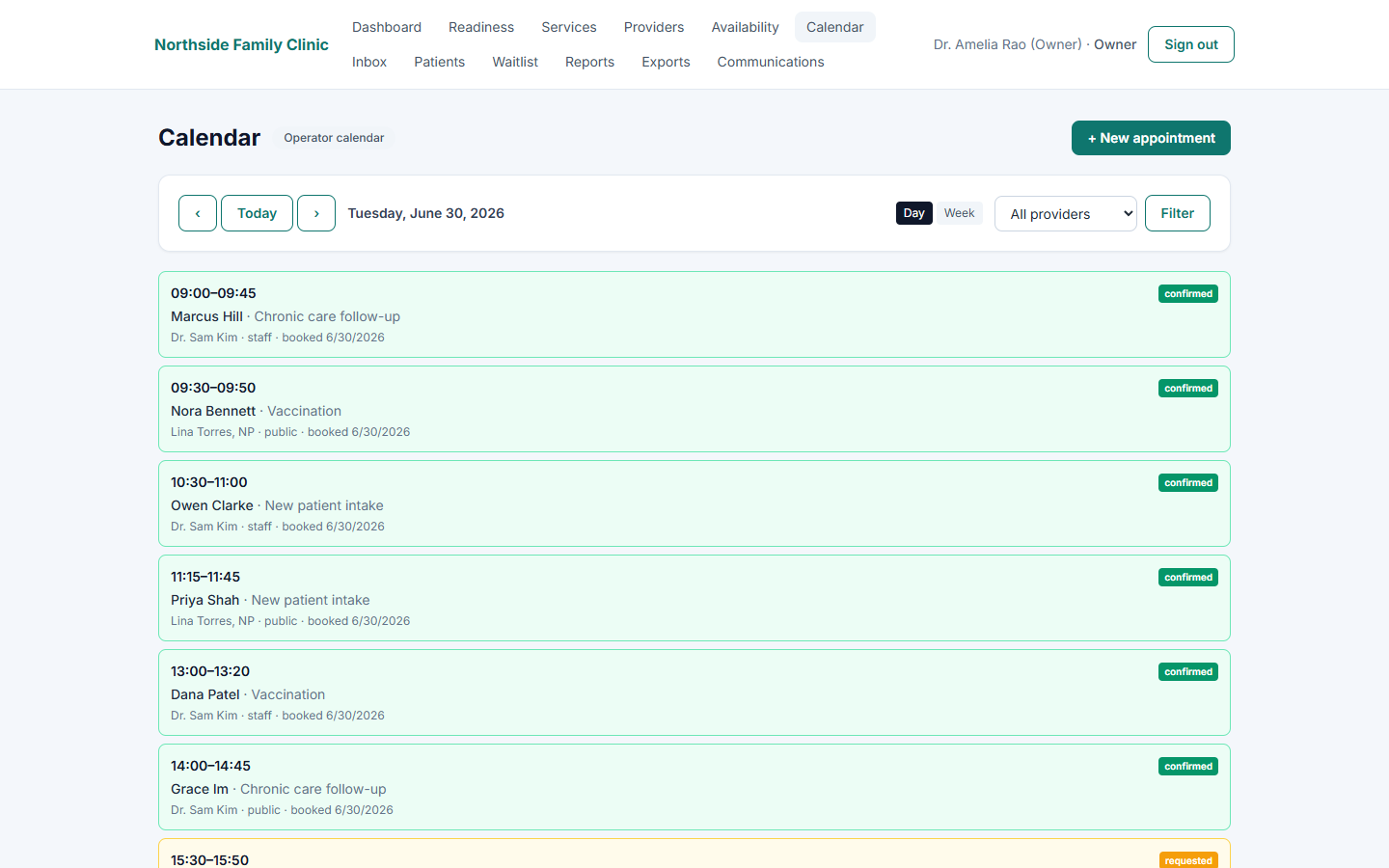
What to know before you build.
- Free appointment scheduling software: what the free plans give you, and how to test one
- Salon and spa booking system: the gap-filling problem nobody prices
- Patient appointment scheduling software: what a clinic needs that a booking link doesn't do
- Meeting room booking system: why it needs a fraction of a booking app